INSIGHTS
Understanding how people used them….
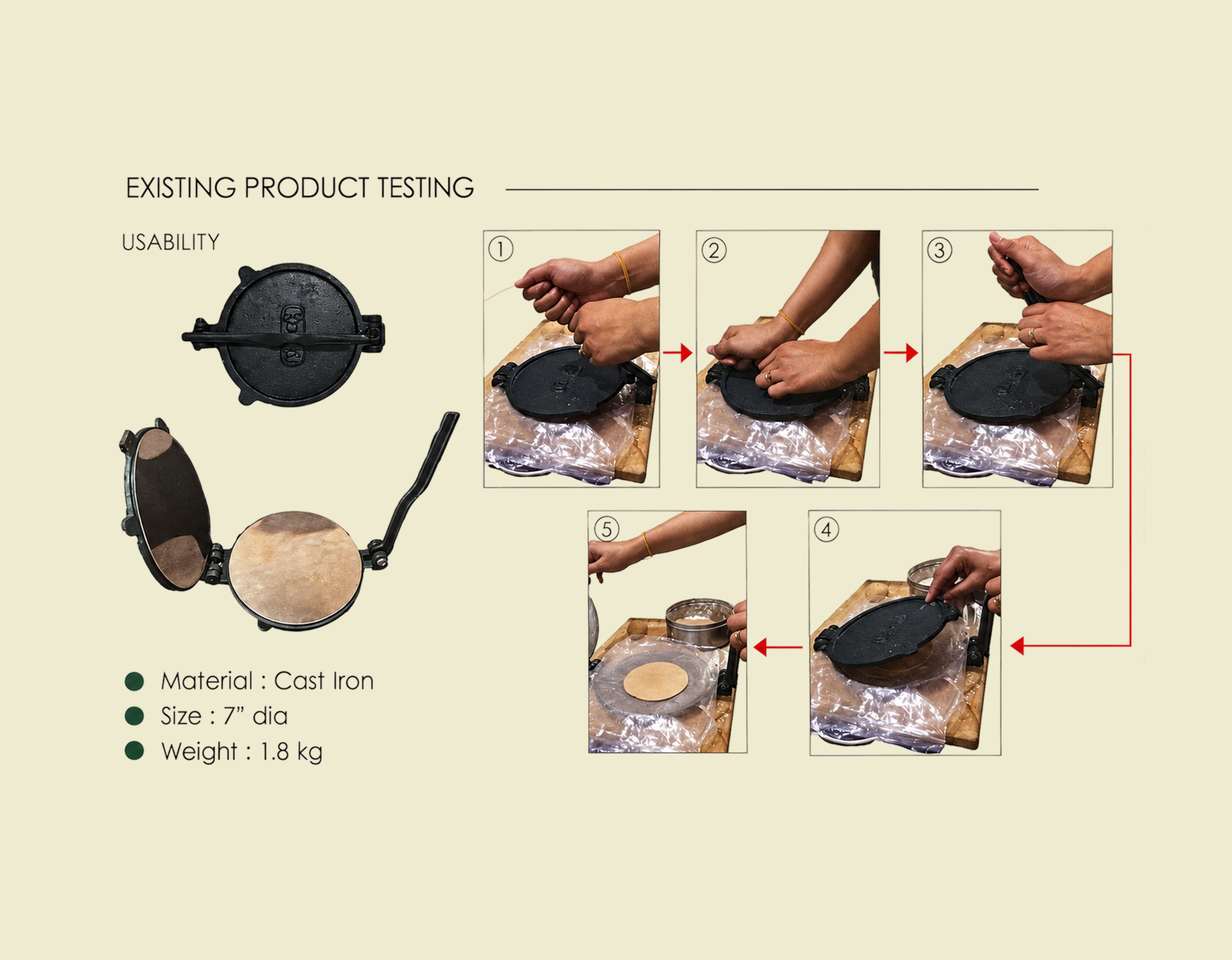
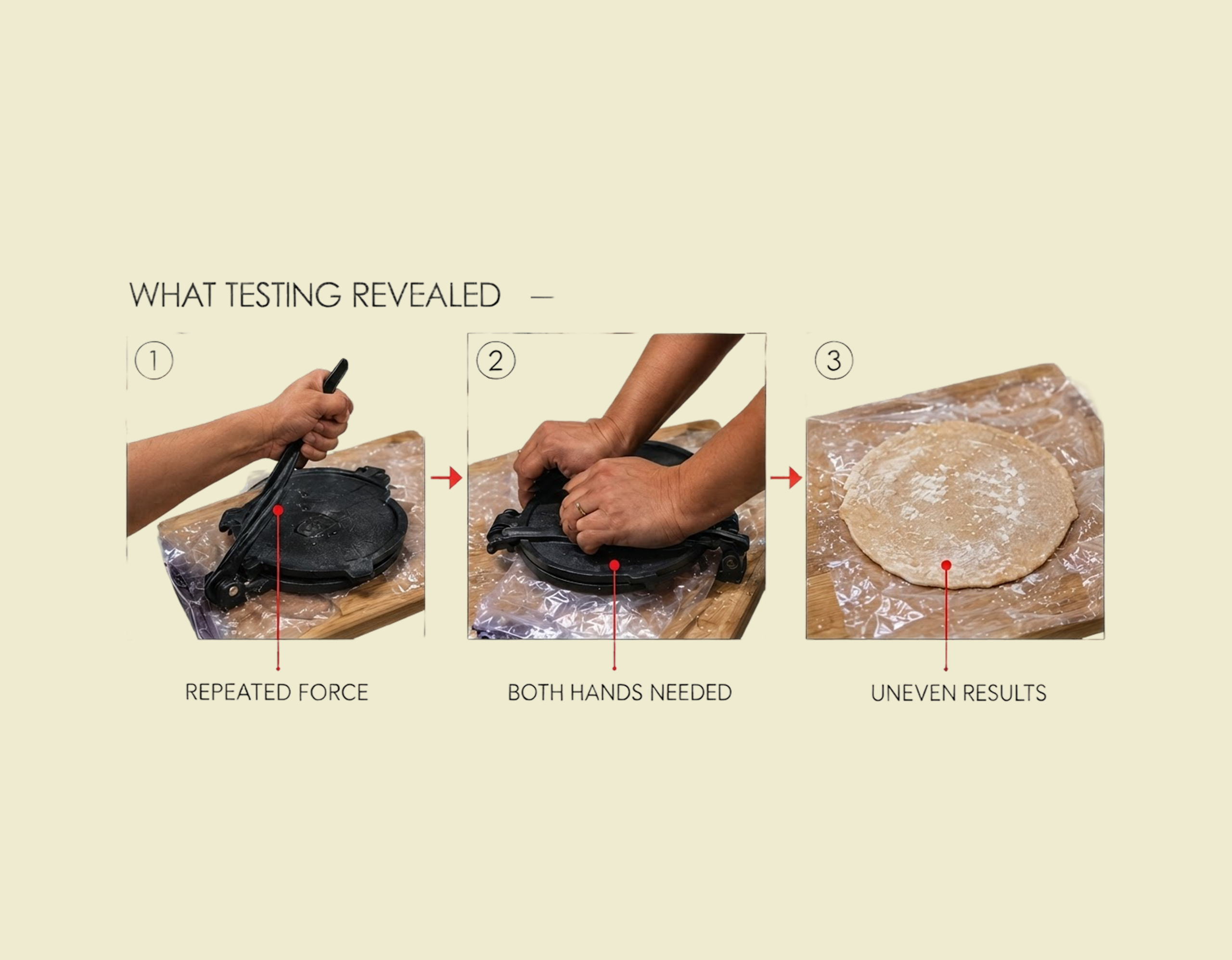
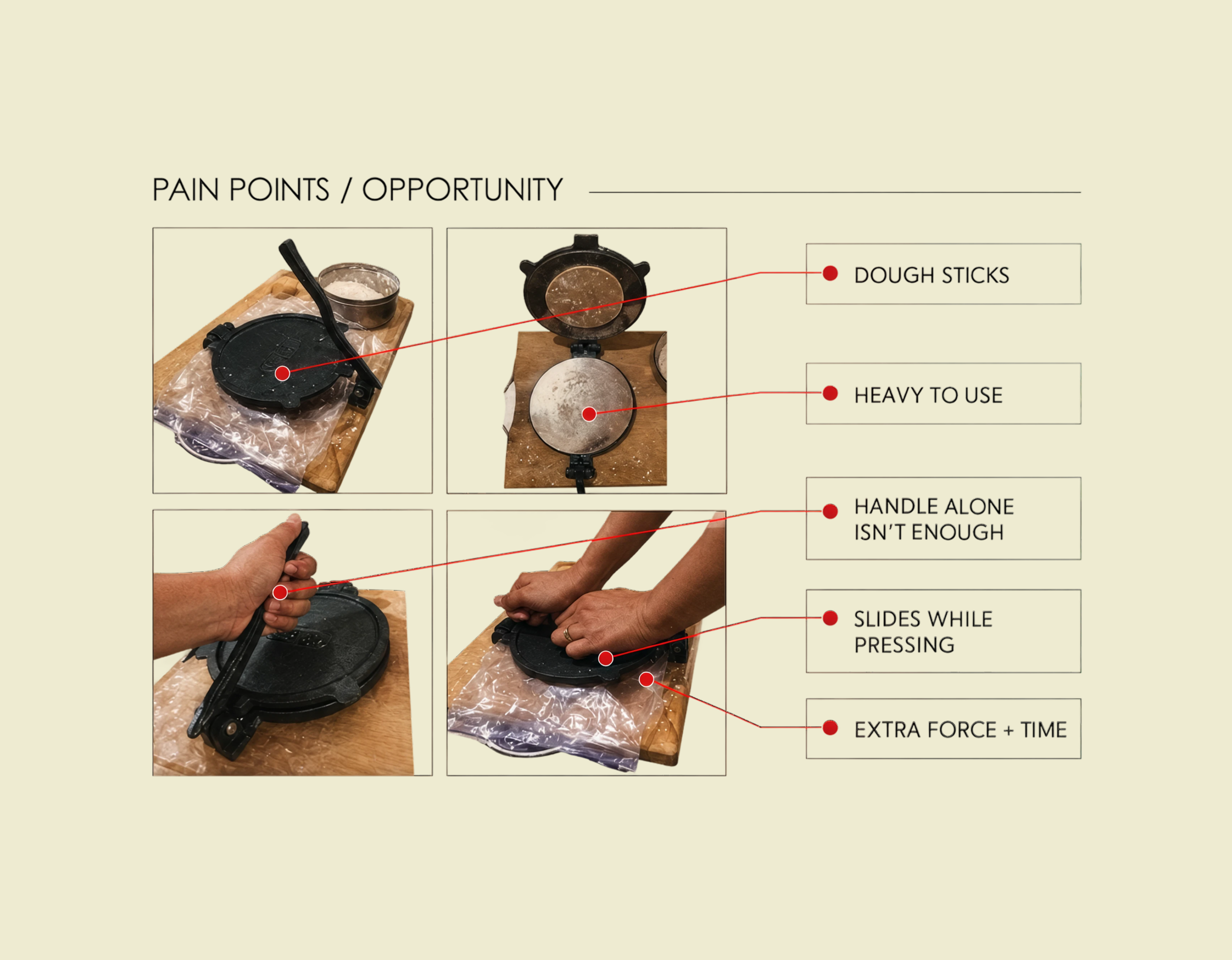
I tested different dough quantities and preparation methods, recording the effort, time and consistency of each result. Testing revealed that the lever alone was rarely enough, users had to press repeatedly and use both hands to flatten the dough.
Jotting down the pain points…
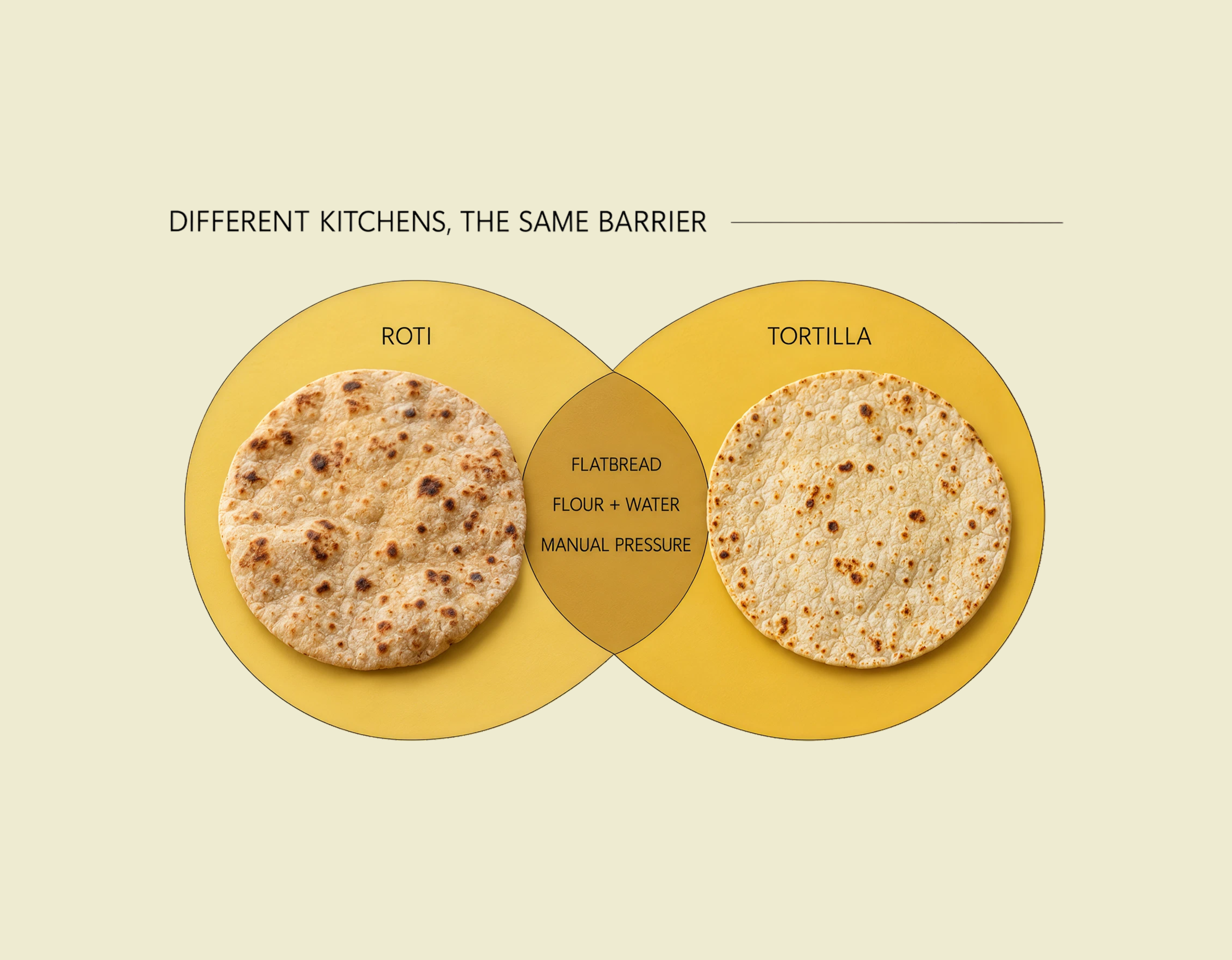
Different kitchens, the same barrier…
The problem reminded me of Indian elders, including my grandmother, who experience similar difficulty while rolling rotis because of arthritis.
How might rolling dough require less strength?
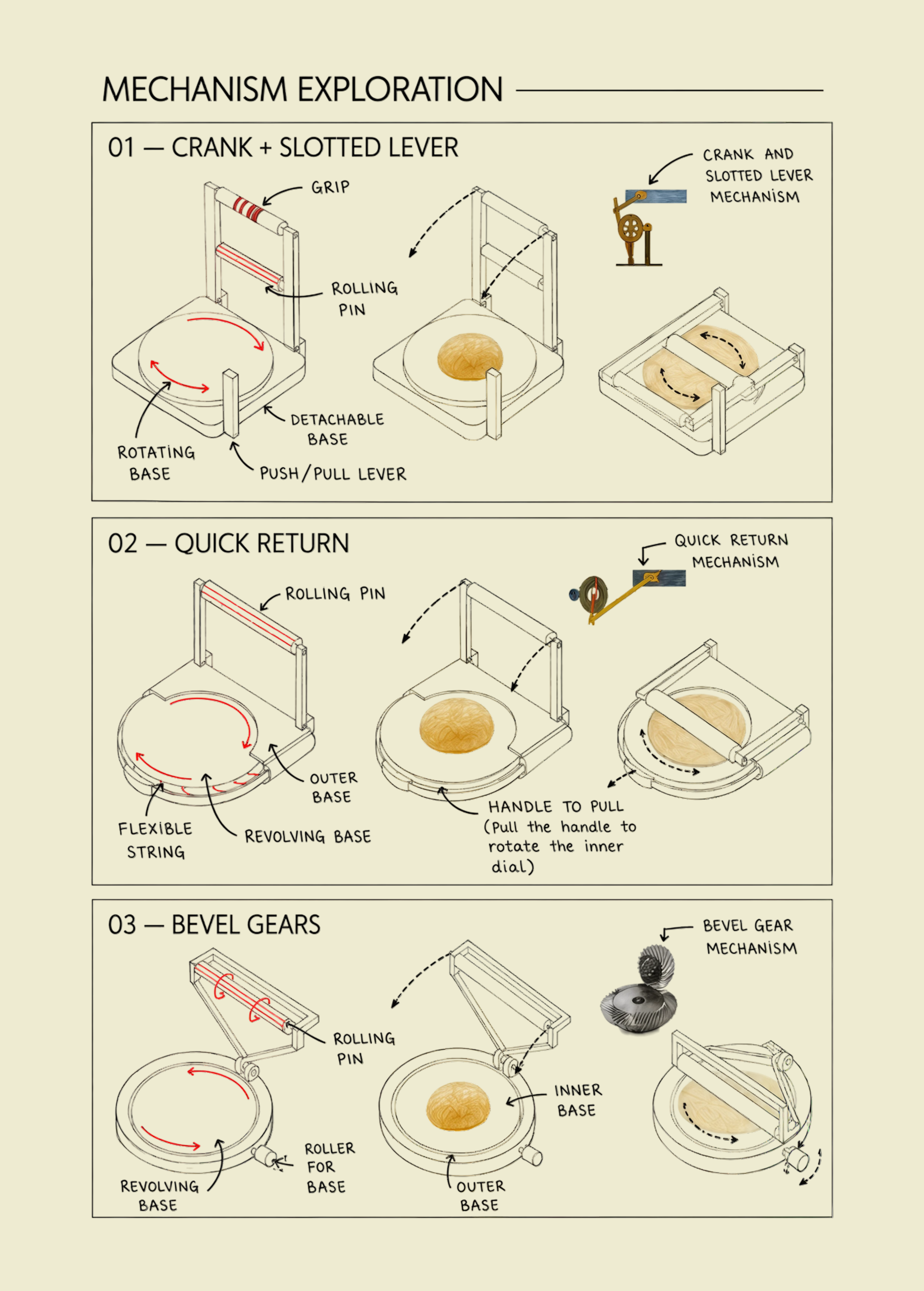
I explored mechanisms that could coordinate pressure, rolling and rotation while preserving the familiar act of making flatbread by hand.
SOLUTION
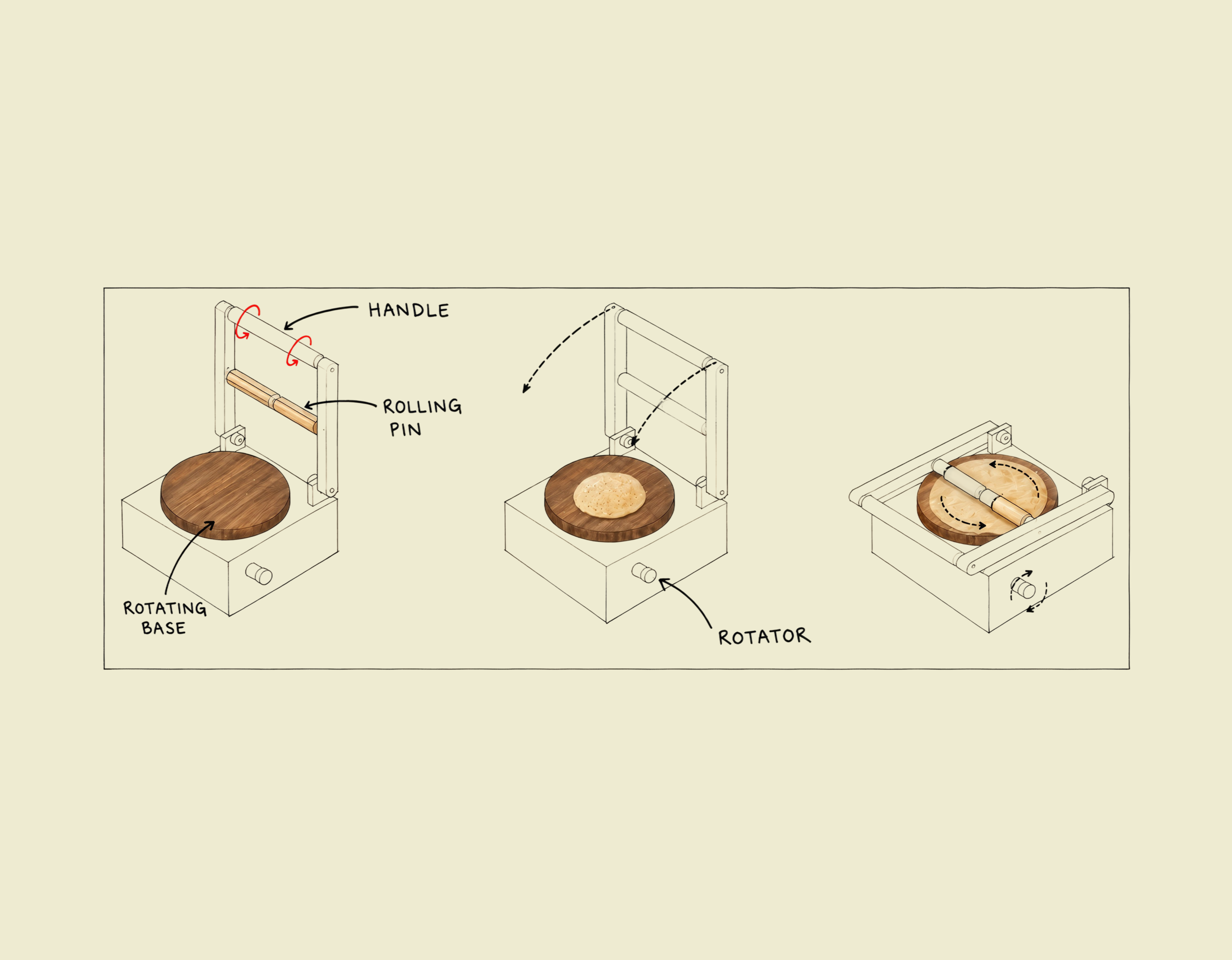
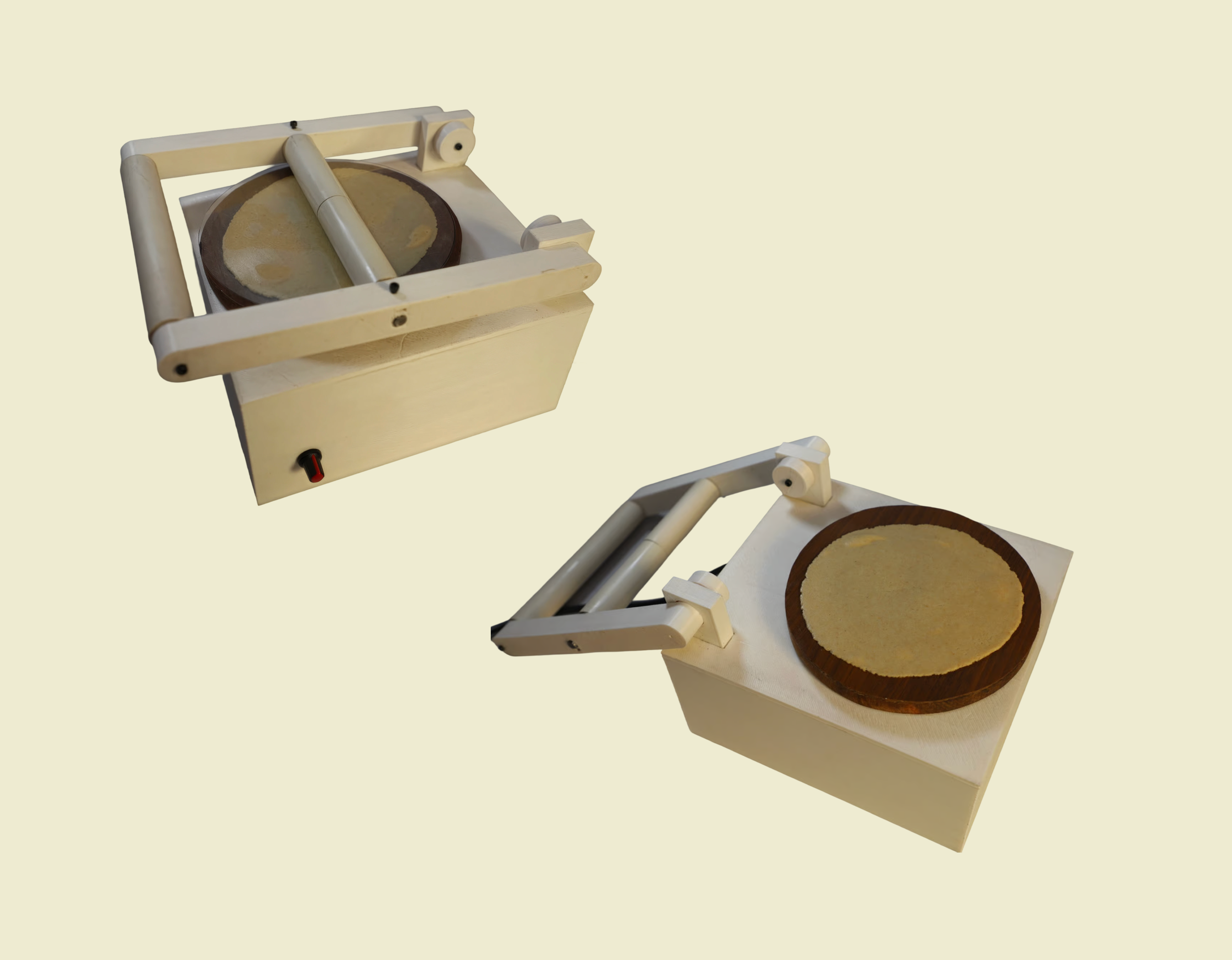
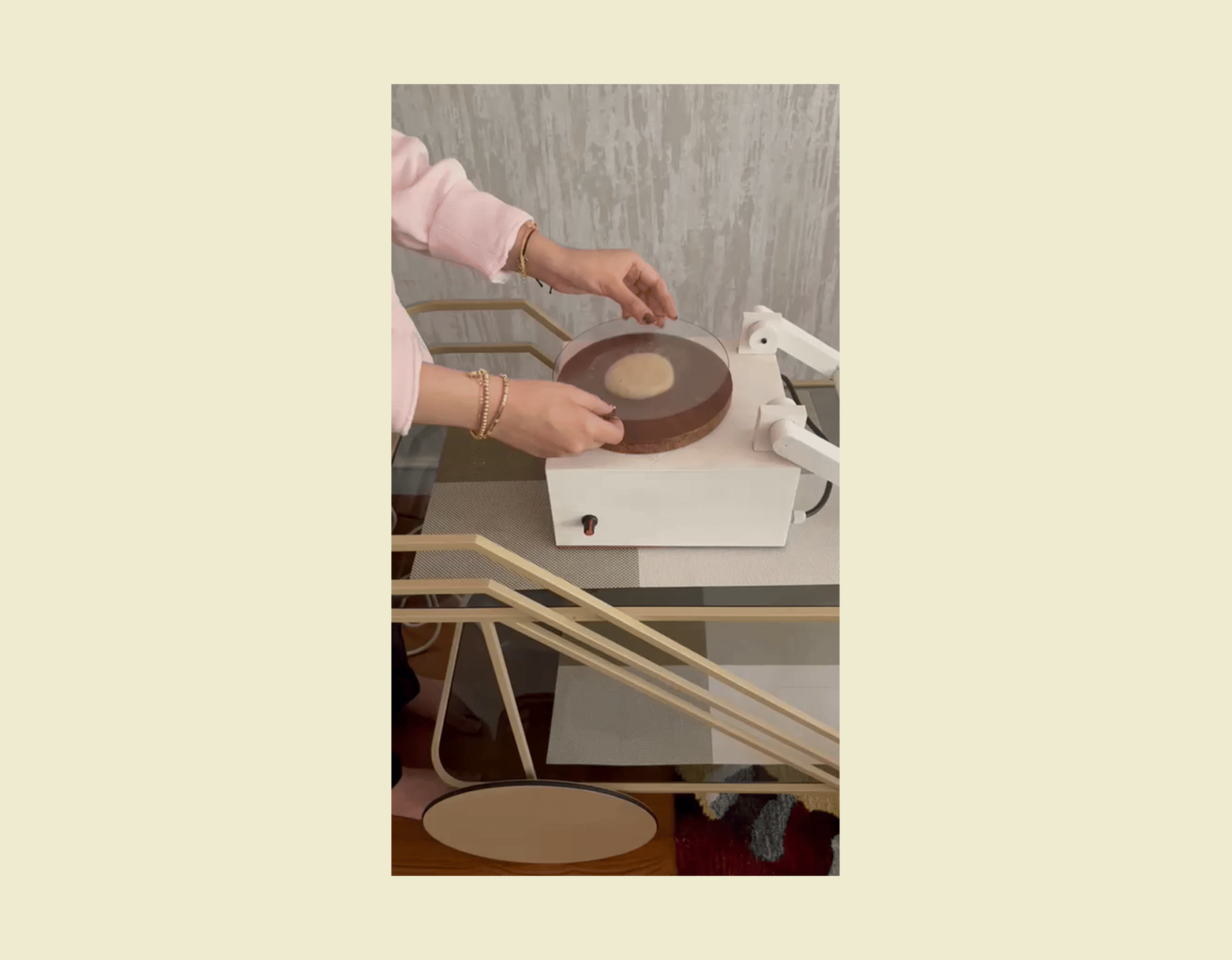
Introducing the Roti Roller…
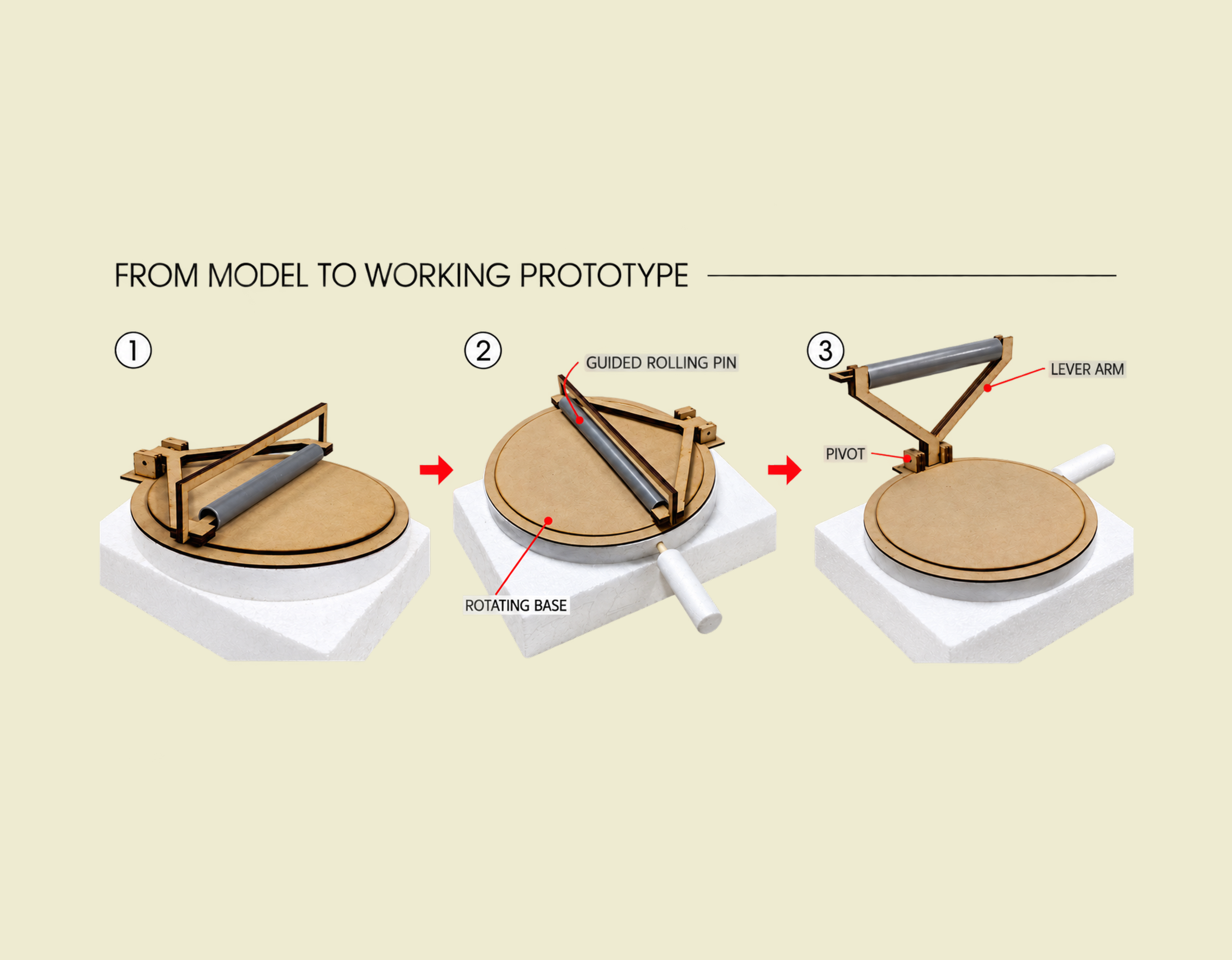
A rotating base and guided rolling mechanism distribute pressure more evenly, reducing repetitive hand and wrist movement. I built a mid-fidelity model to test the rolling path, rotating base and lever movement before developing a fully functional prototype.
Outcome
The leadership and product team loved my ideas and used my mechanism to develop their tortilla press.
Want to learn more?
I’m happy to chat more about my process over a call. Reach out to me at ssud@usc.edu !